
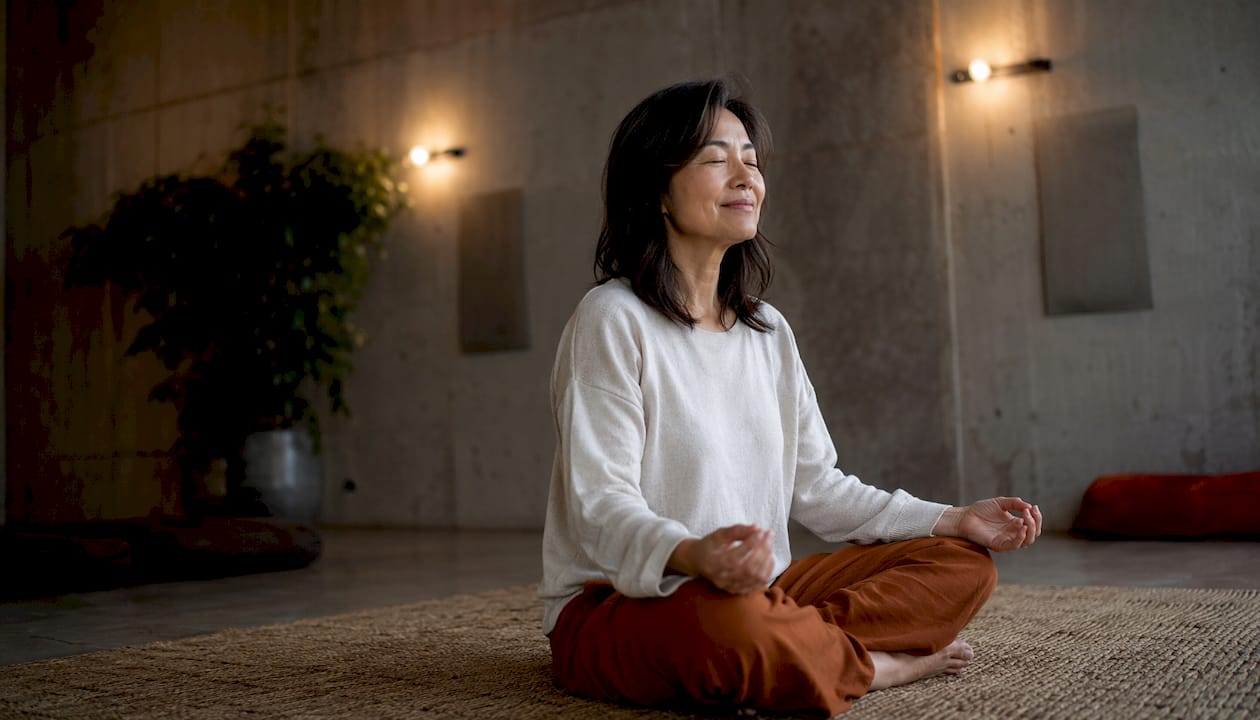
Evidence supports meditation as an effective tool for reducing perceived stress, with measurable improvements appearing in many clinical trials within eight weeks of consistent practice. Even brief daily sessions of 5–10 minutes produce real physiological change, and consistency matters far more than session length. If you’re in Melbourne CBD and want a guided experience rather than going it alone, Relaxdayspa offers meditation sessions integrated with massage and hot stone therapy — a combination that primes your nervous system for deeper relaxation than either practice achieves separately.
Session formats available at Relaxdayspa:
- Private one-on-one guided meditation sessions
- Meditation integrated into a massage or hot stone treatment
- Couples sessions combining shared relaxation and guided practice
Who benefits most: busy Melbourne CBD professionals carrying chronic work stress, and couples seeking a shared reset rather than separate solo practices.
How does meditation reduce stress? What the research shows
The short answer: it shifts your nervous system out of threat mode. Meditation triggers what researchers call the relaxation response, a physiological state in which parasympathetic activity increases, heart rate slows, and the body moves away from the fight-or-flight arousal that sustained stress produces. Vagal activation plays a central role here, with regulated breathing and contemplative practice producing measurable improvements in heart rate variability, a reliable marker of autonomic balance.
“Mindfulness meditation programmes had moderate evidence to improve anxiety at 8 weeks, with benefits persisting at 3–6 months.” — Systematic review, 47 RCTs, 3,515 participants
The biological effects go deeper than mood. Research published in PLOS ONE found that relaxation response practice shifts gene expression linked to energy metabolism and inflammatory pathways after eight weeks, and that even a single session can induce rapid transcriptome changes in long-term practitioners. That is not a trivial finding. It suggests the body is responding at a cellular level, not just a psychological one.
A large randomised trial of approximately 1,458 employees found that ten minutes of daily digital mindfulness practice significantly reduced perceived stress scores at eight weeks, with gains maintained at four months. Participants who practised at least five minutes per day showed larger reductions than those who fell below that threshold. Regular practice also produces structural brain changes: increased cortical thickness in regions governing emotional regulation and sensory perception, which supports long-term resilience rather than just short-term calm.
Which meditation practices work best for stress relief?
Guided breathing, body scan, and mindfulness-based stress reduction (MBSR) formats all have solid trial evidence behind them. App-based programmes running 20–30 days or eight weeks have shown improvements in both perceived stress scores and heart rate variability in multiple RCTs. The format matters less than the regularity.
The APA notes that meditation is not about clearing the mind. It is about changing your relationship to thoughts, which is why stress reactivity and cortisol output drop over time even when life circumstances stay the same. That reframing is what makes the practice sustainable.
Evidence-backed formats for stress:
- Guided breathing: slow, regulated breath activates vagal pathways within minutes
- Body scan: systematic attention to physical sensation interrupts rumination and grounds awareness
- Short mindfulness sessions (MBSR-style): 8-week programmes with daily 5–10 minute practice show the most consistent trial results
- Brief guided digital programmes: effective for work-related stress when daily adherence is maintained
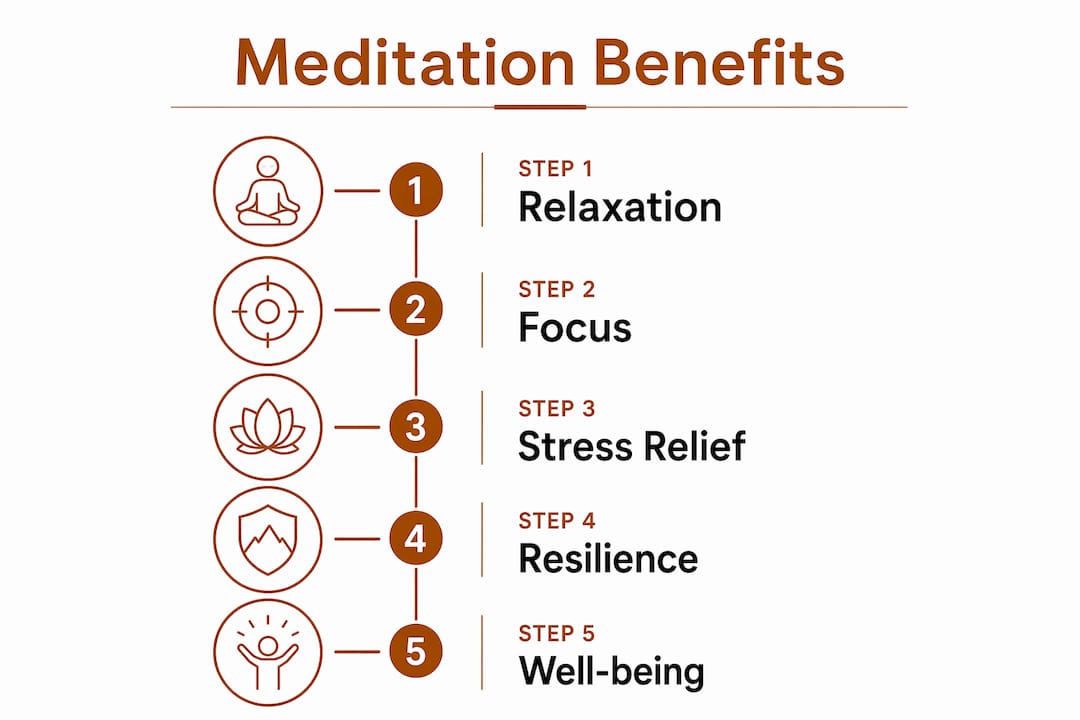
A simple 5-step practice to try before your spa session
- Sit or lie comfortably with your eyes closed.
- Take three slow breaths, extending the exhale to roughly twice the length of the inhale.
- Scan from the crown of your head to your feet, noticing tension without trying to fix it.
- Return attention to the breath whenever thoughts arise. No judgment, just a gentle redirect.
- Spend the final minute simply observing the natural rhythm of your breathing.
A brief practice before arriving at the spa can meaningfully reduce baseline arousal, so the therapist’s work lands on a nervous system that is already beginning to downregulate.
Pro Tip: Pair your daily practice with a fixed cue, such as morning coffee or the commute home. Habit-stacking is one of the most reliable ways to maintain the consistency that drives results.
What to expect from a guided session at Relaxdayspa
A guided meditation session at Relaxdayspa is not a class you sit through. It is a therapist-led experience woven into the treatment itself. The most popular format pairs a 60–90 minute massage with a 10–20 minute guided body scan or breathing sequence, either at the opening of the session to prime relaxation or at the close to consolidate it. Standalone guided sessions typically run 20–45 minutes.
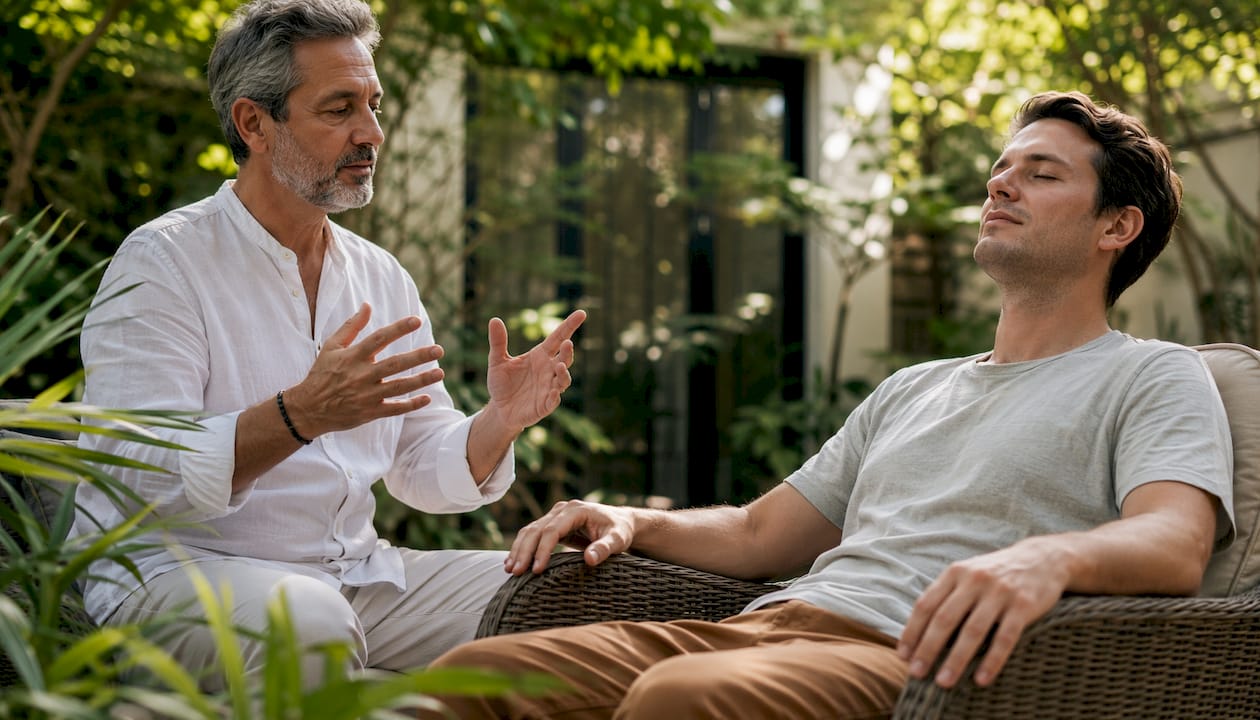
Hot Stone Therapy is a natural companion to guided meditation. The warmth of the stones penetrates deep muscle tissue, releasing physical tension that the mind often mirrors. When the body softens first, the meditative state follows more readily. Therapeutic touch sends calming sensory signals that support vagal activation and parasympathetic engagement, which is why the combination consistently produces deeper relaxation than either practice alone.
The sensory environment matters too. Relaxdayspa uses low lighting, aromatic elements, and tactile comfort to signal safety to the nervous system before the session even begins. That multisensory approach to stress relief is not incidental. It is what separates a luxury spa session from a guided audio track on your phone.
Couples sessions follow the same structure in a shared treatment room, with a therapist guiding both partners through the same breathing or body scan sequence. Many couples find the shared experience more grounding than solo practice.
Pro Tip: Arrive 10–15 minutes before your session. Sitting quietly in the spa’s reception space, away from your phone, gives your nervous system a head start on downregulating before the therapist begins.
How to prepare for your guided meditation session
Preparation is straightforward, but a few details make a real difference to what you get out of the session.
- Wear or bring loose, comfortable clothing. You will be asked to change, but arriving already relaxed sets the tone.
- Eat lightly beforehand. A heavy meal within an hour of your session can interfere with relaxation and make lying still uncomfortable.
- Arrive hydrated. Drink water before and after; massage and meditation both support lymphatic circulation.
- Disclose any injuries, mobility limitations, or medical conditions at booking. This allows the therapist to adapt the guided practice and any physical treatment accordingly.
- Ask at booking: how long is the guided element, how will it be led (voice only, music, both), and whether the space is fully private.
- During the session: if any technique feels uncomfortable, you can signal the therapist at any time. There is no obligation to continue with a specific practice.
Aromatherapy is typically offered as part of the session environment. If you have sensitivities to particular scents, mention this when you book.
Who should take care with meditation?
Meditation is safe for the vast majority of people, but it can surface strong emotions for some, particularly those with a history of trauma or significant mental health challenges.
If you have a history of PTSD, severe depression, or current suicidal ideation, speak with your treating clinician before beginning an intensive meditation programme. A spa therapist is not a substitute for clinical care.
For most clients, shorter guided sessions in a supportive spa environment carry minimal risk. The key adaptations for sensitive clients are shorter session lengths, grounding practices that keep attention anchored to physical sensation rather than open awareness, and a clear understanding that opting out of any element is always acceptable. Cardiovascular concerns are rarely a contraindication for gentle guided breathing, but if you are unsure, check with your GP first.
Open communication with your therapist before and during the session is the single most important safety measure.
How to book a meditation and massage session in Melbourne CBD
Relaxdayspa accepts bookings online, by phone, and via gift vouchers, which make a practical option for clients who want to give a shared experience rather than a product. Couples bookings are available for the same treatment room.
Package combinations worth considering:
- Relaxation massage + guided body scan (60–75 minutes): suited to first-timers or clients seeking immediate stress relief after a demanding week
- Hot stone therapy + guided breathing sequence: deeper muscular release paired with breath-led meditation; well suited to clients carrying physical tension from desk work
- Couples massage with hot stones + shared guided session: a full shared reset for two, combining therapeutic touch and guided mindfulness in one appointment
For immediate stress relief, a single 60-minute session delivers measurable benefit. For resilience building, the trial evidence points to consistent practice over eight weeks, which is where pairing regular spa visits with a short daily home practice produces the strongest results.
The case for doing this properly
Most people who try meditation for stress give up within two weeks because they expect silence and get noise instead. The mind does not go quiet. That is not the goal, and the research is clear on this: what changes is your relationship to the mental noise, not the noise itself. Cortisol drops, heart rate variability improves, and gene expression shifts, not because you achieved a blank mind, but because you practised returning attention to the present moment, repeatedly, over weeks.
The spa context matters more than it is usually given credit for. A therapist-guided session in a carefully designed sensory environment removes the friction of self-directed practice. You are not managing the environment, the timing, or the technique. You are simply present. For clients who have tried apps or YouTube guides and found them ineffective, the in-person guided format often works where solo practice has not, because the nervous system responds differently to human presence and therapeutic touch than it does to a recorded voice.
Meditation and mindfulness in a spa setting is not a trend layered onto massage. It is a physiologically coherent combination with a genuine evidence base behind it.
Book a guided meditation treatment at Relaxdayspa
Relaxdayspa, awarded Best Day Spa in Melbourne 2023, offers guided meditation integrated directly into massage and hot stone treatments at its Melbourne CBD location. Whether you are booking solo after a demanding week or looking for a couples massage with hot stones as a shared reset, the spa’s therapists combine evidence-based guided practice with therapeutic touch in a purpose-designed environment.
Packages range from a 60-minute relaxation massage with a guided body scan to a full hot stone and couples session. Gift vouchers are available online and in-spa. Book online, call directly, or pick up a voucher for someone who needs a proper break. The booking page is at relaxdayspa.com.au.
This article provides general wellness information and is not a substitute for professional medical or psychological advice. If you have a clinical mental health condition, consult your treating clinician before beginning a meditation programme.
Useful sources
The claims in this guide draw on the following primary research. Readers who want the full methodology and data are encouraged to go directly to the source.
The strongest evidence for meditation reducing stress comes from randomised controlled trials with active controls — not self-report surveys or uncontrolled studies. The sources below meet that standard.
- Meditation Programmes for Psychological Stress and Well-being: Systematic Review and Meta-analysis — 47 RCTs, 3,515 participants. The benchmark review for mindfulness meditation and anxiety/depression outcomes. Moderate evidence for improvement at 8 weeks and 3–6 months.
- Digital Meditation RCT: Employee Stress — N ≈ 1,458. Demonstrates that brief daily digital mindfulness (10 minutes) reduces perceived stress at 8 weeks, with adherence of at least 5 minutes per day producing larger gains.
- App-based Mindfulness and Physiological Stress Reactivity — Shows improvements in perceived stress scores and heart rate variability from 20–30 day guided programmes.
- Deep Rest: Integrative Model of Contemplative Practices — Framework explaining how meditation produces parasympathetic dominance, vagal activation, and cellular restoration.
- Genomic Counter-stress Changes from the Relaxation Response — PLOS ONE study documenting gene expression changes in energy metabolism and inflammatory pathways after 8 weeks of relaxation response practice.
- APA: Mindfulness and Meditation Overview — Authoritative summary of psychological mechanisms, neurological changes, and clinical applications of regular mindfulness practice.